Featured Publication
Archie, K.M.; Arnott, J.C.; Vano, J.A., Hirshfeld, D.; Rasch, R.; Mateo, E. Climate information use in transportation planning: A survey of Metropolitan Planning Organizations. https://doi.org/10.1016/j.crm.2025.100742


Sea level rise, storm surge, increased precipitation, extreme heat, wildfires, thawing permafrost, erosion, and other extreme weather events are some of the ways that climate change impacts roads, bridges, and other transportation infrastructure. Climate change decision making in this context may use climate information to relocate infrastructure, modify or enhance designs to accommodate emerging climate hazards, or incorporate new materials or approaches, including nature-based solutions, into infrastructure projects.

Archie, K.M.; Arnott, J.C.; Vano, J.A., Hirshfeld, D.; Rasch, R.; Mateo, E. Climate information use in transportation planning: A survey of Metropolitan Planning Organizations. https://doi.org/10.1016/j.crm.2025.100742
For this investigation, we surveyed regional transportation planners from U.S. Metropolitan Planning Organizations (MPOs). While not typically the primary owner or implementer of metro area transportation plans, MPOs are required by law to provide input into highway transportation projects that use federal funds, and have become widespread across the United States as coordination hubs for regional planning.
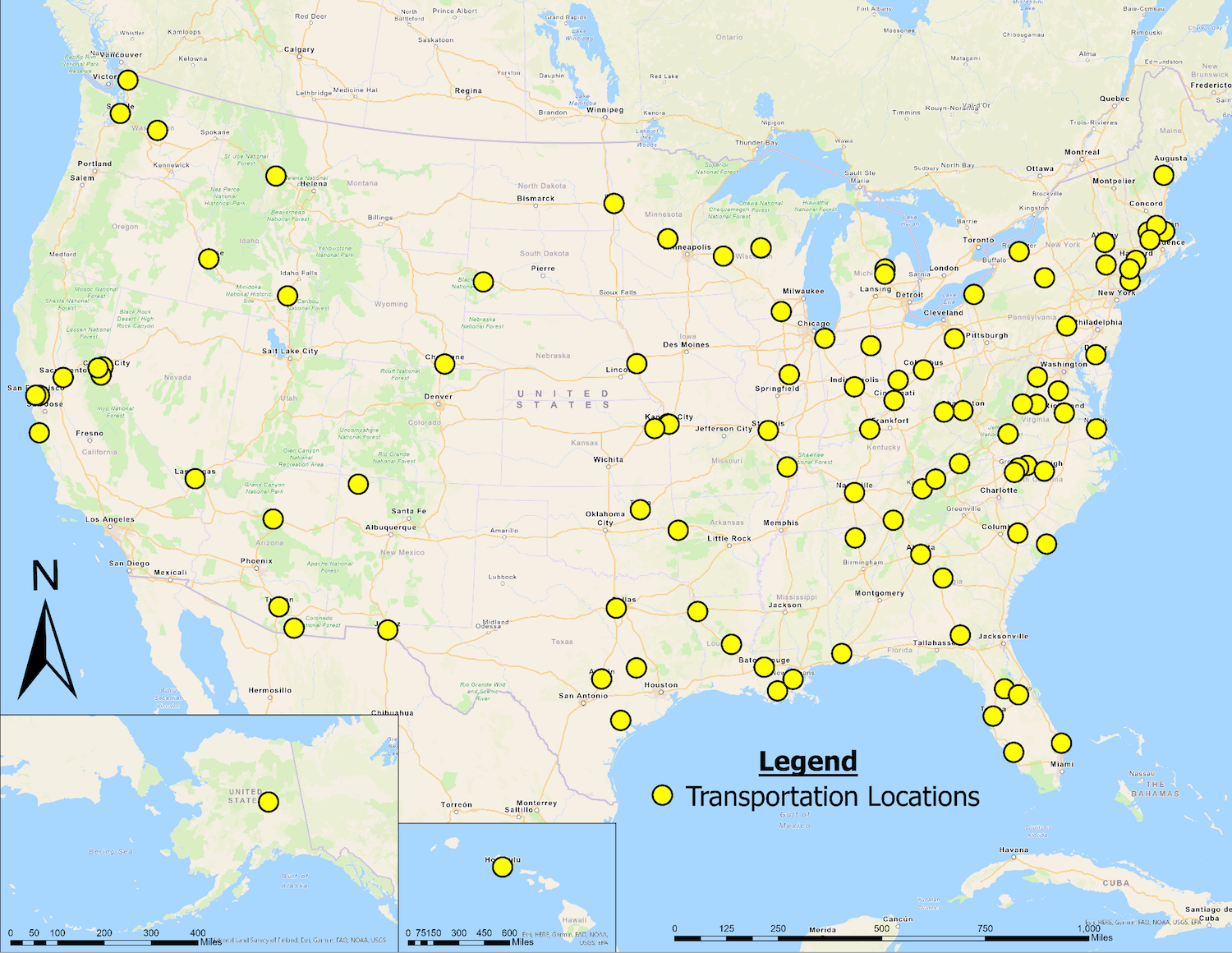
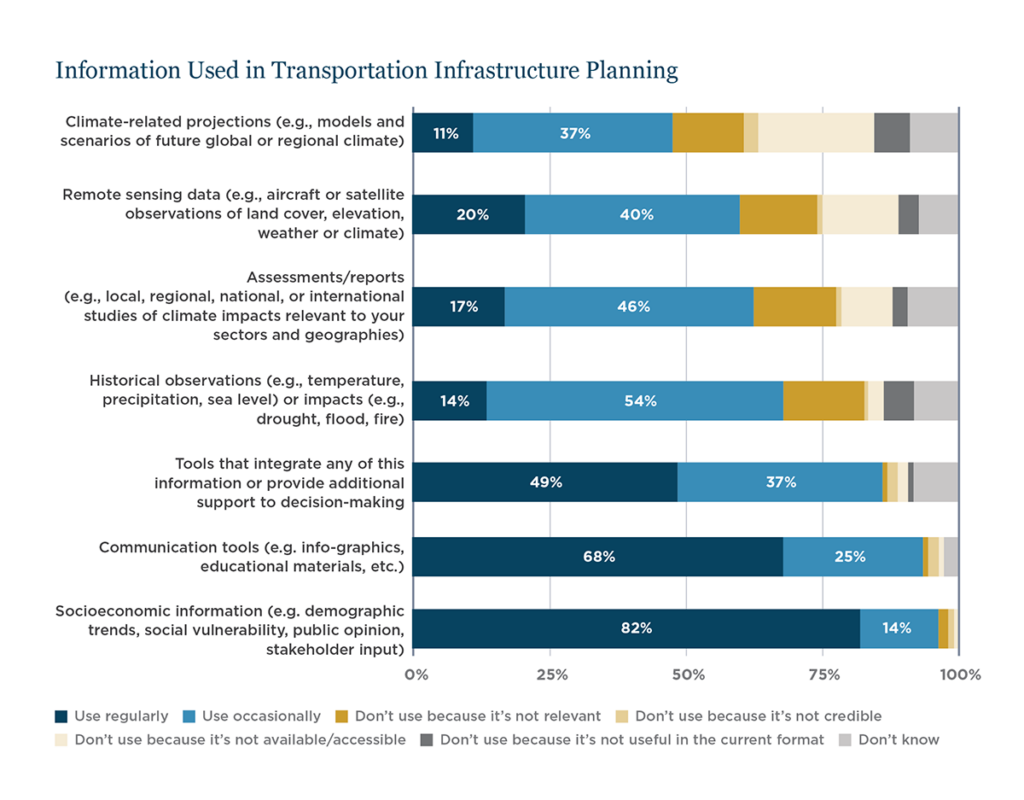
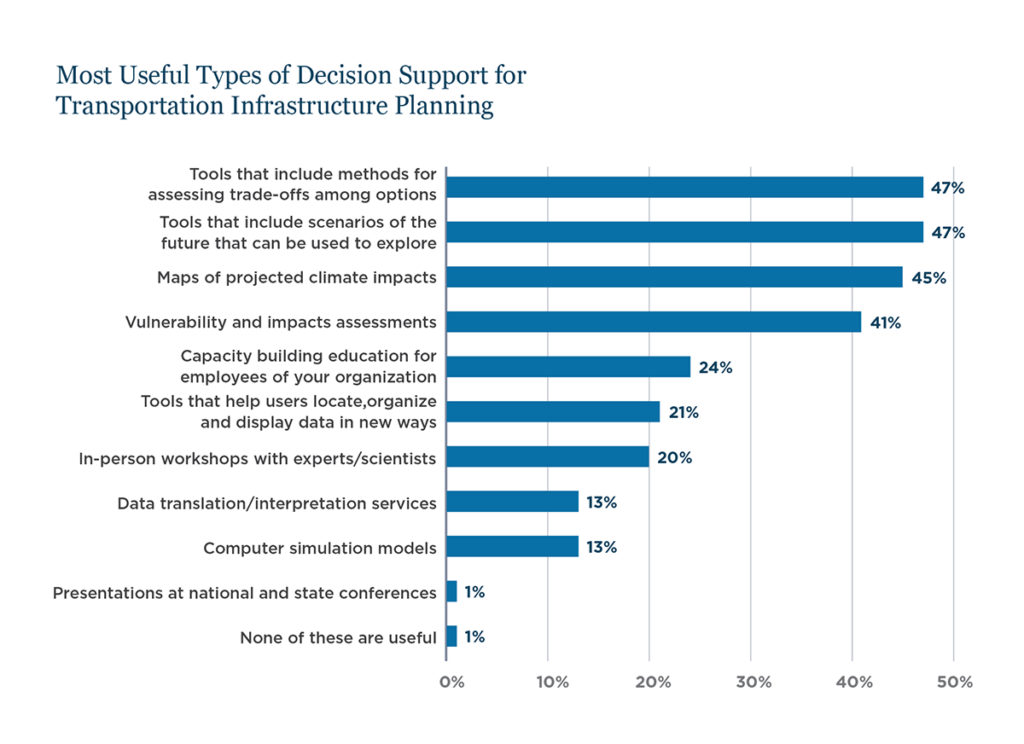
Our survey asked respondents (n=105; Figure 1) about the types of climate-related information used in transportation infrastructure planning, how they are applied, and the kinds of decision support deemed most helpful by these professionals (Figures 2 and 3). Additionally, the study examines how the rollout of the Bipartisan Infrastructure Law/Infrastructure Investment and Jobs Act (BIL/IIJA), along with other factors, may influence the demand for and use of climate information.
Climate information is being used by transportation planners, at least occasionally.
This study reveals a shift in how transportation professionals use climate information, indicating a growing acceptance beyond early adopters noted in early assessments (TRB, 2008). Close to half (49%) of respondents reported at least occasional use of climate data in planning, and more than half (54%) of respondents either agreed or strongly agreed that including climate information has already helped their organization to make better decisions. The extent of usage varies, with fewer than 25 percent reporting regular use of projections, historical observations, or remote sensing data (see Figure 2).
“There is general acknowledgement that climate change is happening and that we need to make different transportation decisions to help stem/mitigate impacts. But there is disagreement about how/when/which interventions to pursue.”
— Transportation investigation participant
New policies, education, and capacity influence likelihood of climate information use.
The use of climate information by transportation planners is influenced by factors like prior positive experiences, financial resources, and educational background. Higher education is significantly correlated with greater appreciation for climate information. Findings suggest that major infrastructure investments, such as those under the Bipartisan Infrastructure Law/Infrastructure Investment and Jobs Act (BIL/IIJA), reinforce the importance of considering climate risk in infrastructure planning. Respondents were generally optimistic that they would receive BIL/IIJA funding and that they would employ climate information to inform their use of that investment.
“We have lots of maps, vulnerability assessments, etc., however assessing trade-offs and modeling impacts is more challenging.”
— Transportation investigation participant
Recommendations from regional transportation planners for improved climate change decision support:
For more information on this investigation, contact kelli.archie@agci.org.


