

An ally in AI? Breaking barriers for biodiversity conservation

We can’t save what we can’t see. And as species disappear and ecosystems decline, the need to track and model changes in wildlife and habitats is more urgent than ever.
New sensor technologies are transforming how environments can be monitored, generating an unprecedented volume of high-resolution data. At the same time, the tools available to process, analyze, and act on this data are growing exponentially, thanks to rapid advances in artificial intelligence (AI) and machine learning. Together, these developments hold tremendous promise to revolutionize how we understand and protect the natural world.
To realize this potential, collaboration is essential – but deep cultural and disciplinary divides between ecology and AI communities limit how well these innovations can support conservation efforts. These gaps also limit the sharing of knowledge and tools, often resulting in redundant efforts and missed opportunities.
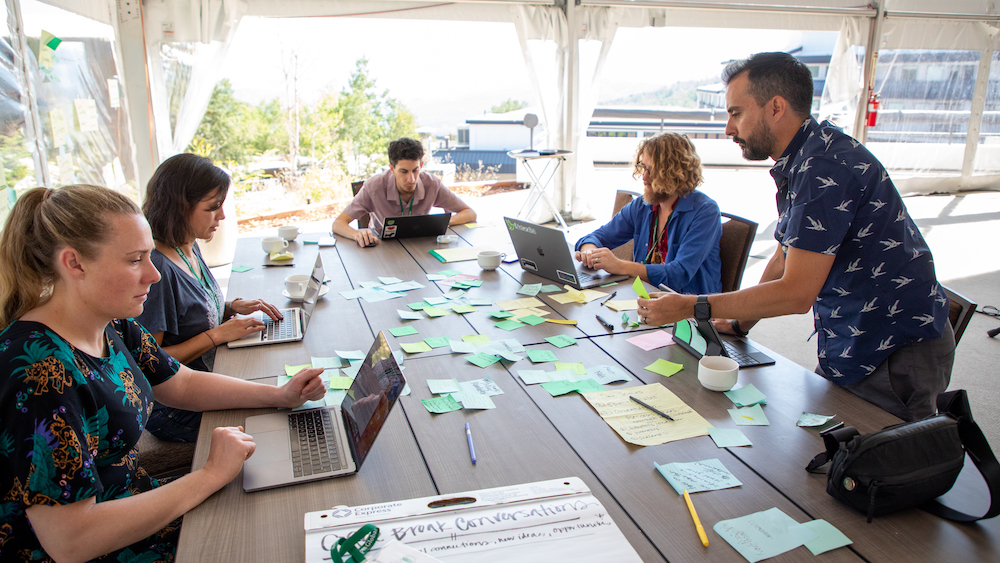
To bridge these divides, AGCI hosted an interdisciplinary workshop on AI for Biodiversity in the summer of 2024 with representatives from academia, philanthropy, private industry, federal agencies, and nonprofits. Harnessing their expertise and experience in data science, ecology, artificial intelligence, modeling and observations, and more, the 28 workshop participants sought to identify critical research and infrastructure bottlenecks, define funding priorities, explore enabling policy options, and foster interdisciplinary collaborations. The workshop was co-chaired by Sara Beery (MIT), Kate Jones (University College London), and David Rolnick (McGill University), and co-sponsored by Arm AI Limited and NASA.
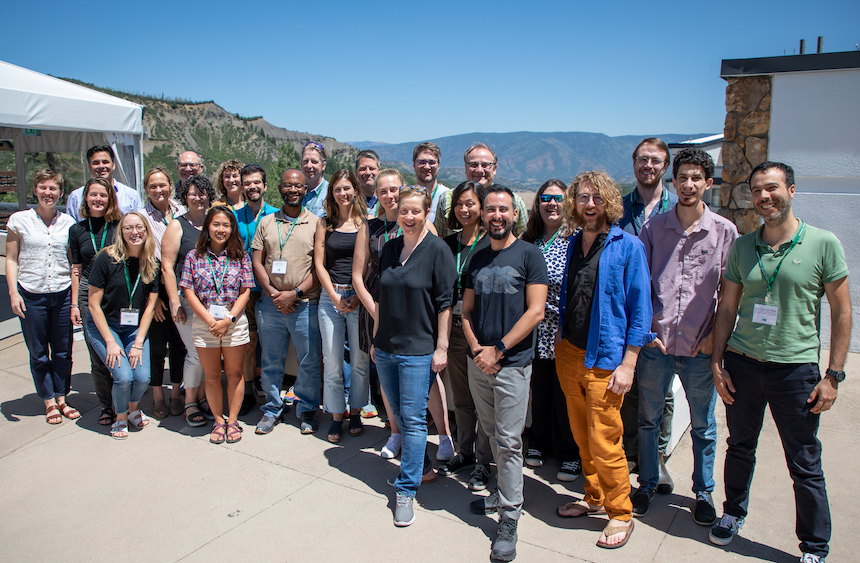
Each day of the weeklong workshop focused on one of four domains—research, infrastructure, funding, and policy—with participants probing the barriers and opportunities to greater application of AI in biodiversity conservation. On the final day, participants synthesized all that had been surfaced and identified next steps, with a focus on finding ways to bridge innovations in AI tools with the infrastructure and policies needed to equitably facilitate their use.
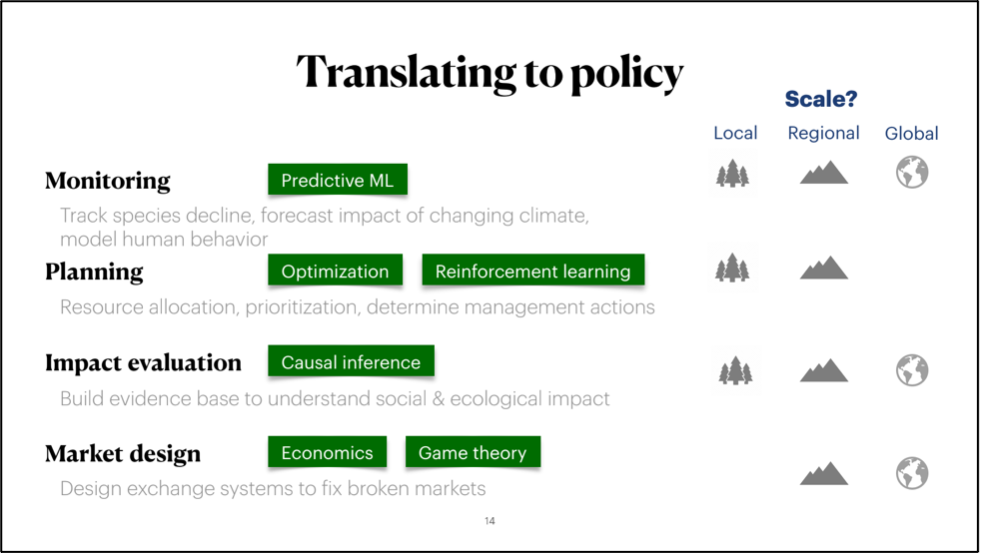
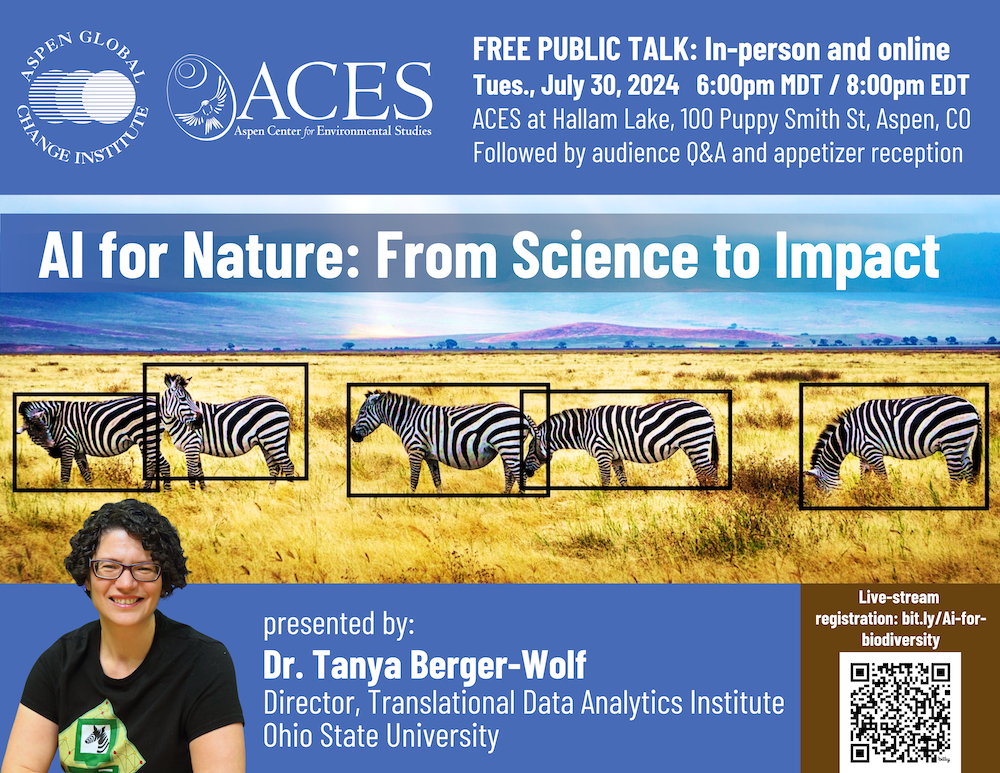
The workshop also featured a Walter Orr Roberts Memorial Public Lecture, “AI for Nature: From Science to Impact,” presented by Tanya Berger-Wolf, director of the Translational Data Analytics Institute at Ohio State University. Dr. Berger-Wolf’s presentation underscored the transformative potential of AI in conservation and the challenges of aligning technical advances with on-the-ground impact.
Key insights
Over the course of the week, participants tackled a number of overarching needs, including:
- Foundational knowledge to ensure the collection, storage, and processing of biodiversity data is fit-for-purpose for conservation efforts. Participants highlighted the importance of this fundamental work in addressing longstanding barriers to action by enabling the development of flexible biodiversity standards and rubrics, robust software and tools, and more innovative end-to-end data pipelines to help scale conservation programs.
- Interdisciplinary collaboration to bridge the gaps between AI developers, ecologists, and policymakers: Participants repeatedly emphasized the importance of aligning technical innovations with the needs of conservation practitioners. Scalable tools, such as iNaturalist, were celebrated as examples of community-driven platforms that effectively bridge these divides.
- Equitable access to infrastructure: Computational resources and data infrastructure remain inaccessible to researchers in under-resourced regions, highlighting the need for straightforward, user-friendly hardware and software. Participants called for targeted investment in capacity-building initiatives, particularly in the Global South, to ensure a more equitable distribution of resources and expertise.
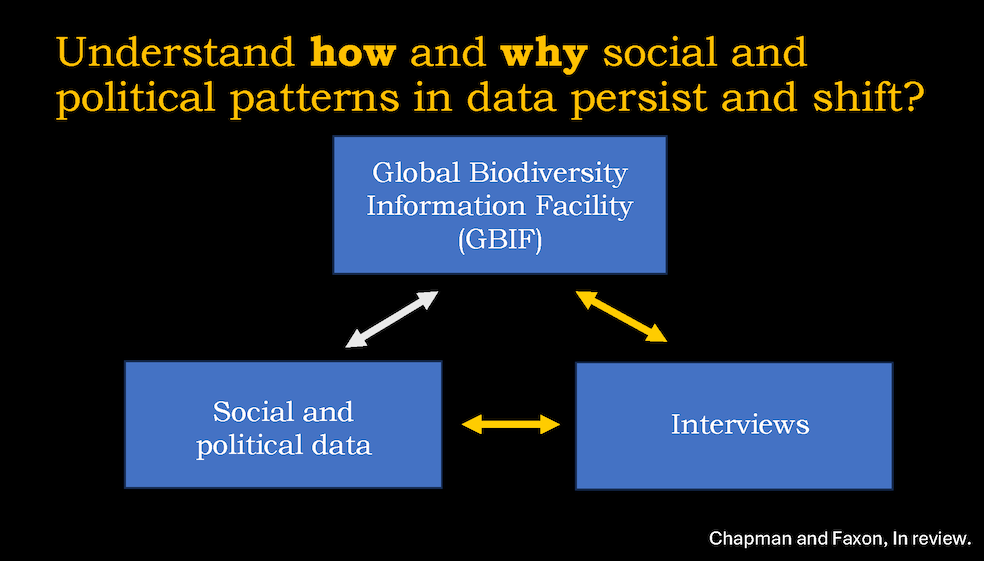
- Innovation in data handling: Multimodal approaches, such as integrating acoustic data with remote sensing, were identified as promising pathways to advance biodiversity monitoring. These advancements must, however, be paired with sustainable funding and infrastructure to ensure their long-term viability.
- Capacity building: Many scientists lack the necessary education to understand and effectively integrate AI into their work, leaving a critical knowledge gap. Lack of financial and institutional support to invest in skill-building perpetuates a cycle where technological advancements outpace the ability of institutions and individuals to adopt and implement them effectively.
- Sustainable funding strategies: The field needs better balance between short-term innovation grants and long-term infrastructure investment. Sustainable, diverse funding will be critical for the longevity of AI as an enabler of greater biodiversity conservation.
Ongoing challenges
The integration of AI into biodiversity conservation reveals unique challenges and tensions within both the conservation and AI research communities. These challenges stem from domain-specific practices, the pace of technological advancement, and the need for interdisciplinary alignment. Lessons from corollary fields offer potential solutions, but addressing these issues requires thoughtful reflection on the implications of adopting AI within the conservation domain without compromising the values and integrity of ecological systems.
Conservation field shifts from research to “productization”
The conservation and biological sciences are shifting from a research-focused framework to one that increasingly demands practical applications and market-oriented solutions. Historically, these fields have relied heavily on grant funding, allowing research to remain within institutional silos, without requiring business models or scalable products. However, as the field moves toward “productization” and pressure for standardized, scalable, marketable products grows, conservationists face emerging challenges:
- Conservation efforts often lack sustainable self-funding models, creating instability when grant cycles end or priorities shift and leaving essential tools and platforms under-resourced;
- The need to adopt new communication strategies and frame conservation work in terms of climate or systemic effects may obscure the nuanced, intrinsic value of ecological work; and
- The unfamiliarity of many within the field to navigating market-oriented paradigms, such as pricing models, customer engagement, and scaling infrastructure creates resistance to capitalization, hindering the transition from research to product. Further, these actionable pathways can be at odds with ethical debates on the “commodification” of biodiversity, highlighting the need for ongoing dialogues on moving biodiversity science into practice.
The rapidly evolving AI research landscape
The AI field is also grappling with challenges that complicate AI adoption in conservation:
- The rapid proliferation of AI models creates difficulties for AI developers and users alike. For researchers, the sheer number of models, many of which are highly specialized, makes it challenging to establish benchmarks, track progress, and encourage reuse of effective tools. For those who want to use AI for biodiversity conservation, the pace of innovation creates uncertainty about which models to learn, adopt, or integrate into practice, further delaying technological implementation.
- Many AI model developers lack familiarity with user interface design, resulting in clunky and resource-intensive tools that are cumbersome, computationally demanding, and impractical for on-the-ground deployment. Similarly, AI models are often “too big to deploy,” limiting their accessibility and usability in conservation work.
Other persistent challenges to greater application of AI to biodiversity conservation include:
- Difficulty of establishing a shared language between AI experts and ecologists;
- Inconsistent interoperability of different sensors, measurement resolutions, mapping projects, and datasets;
- Tradeoffs between data resolution and computational capacity;
- Concerns around data governance and privacy;
- Misalignment between decision-making timescales and the natural or urgent timescales required for effective biodiversity conservation; and
- Sustainable stewardship of natural resources given the potential for resource- and carbon-intensive AI model demands.
Next steps
Workshop co-chairs and participants ended the week with clearly outlined sections for a workshop white paper, now in development. Multiple spinoff efforts and proposals are also underway and will be featured on AGCI’s communications channels as they are published—sign up for our newsletter and follow our LinkedIn page to stay up-to-date on these efforts!