

Reducing uncertainty: Plants, climate, and the future of water availability
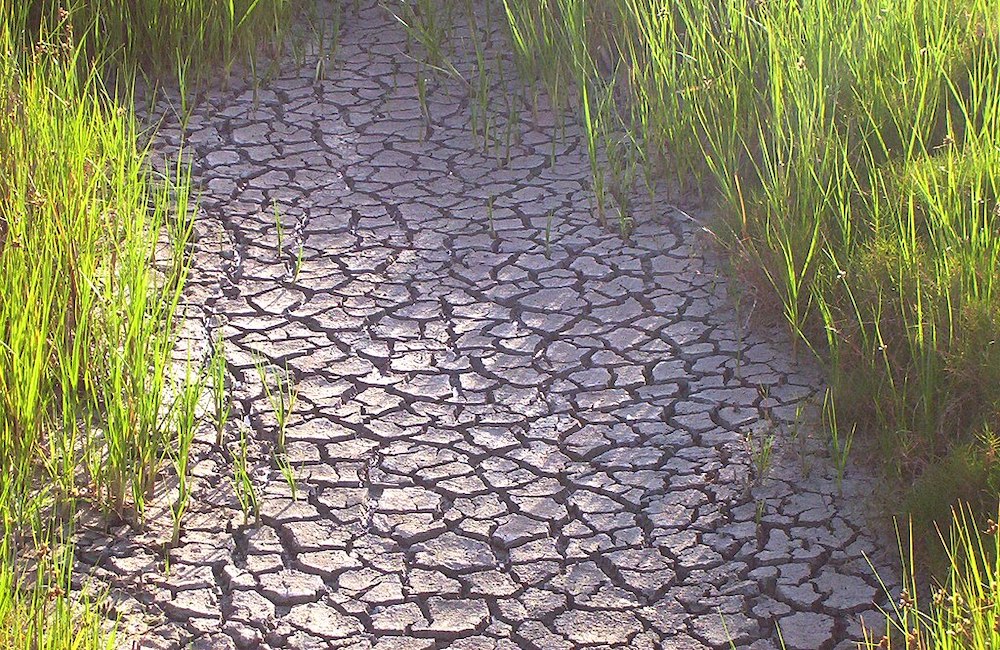
Droughts are an increasingly complex aspect of climate change, influenced by temperature, atmospheric circulation, and water cycle changes. While climate scientists project increased precipitation in some regions as the climate warms, there is growing evidence that other regions will experience more frequent and intense drought. This seeming contradiction is largely due to the interplay between evaporation rates and precipitation, both of which tend to increase in response to warming temperatures. In some regions, the projected increases in evaporation outpace increases in precipitation, creating conditions favorable to drought.
Uncertainties surrounding the extent (and, in some cases, the direction) of changes in drought risk make it challenging to put effective adaptations in place to lessen the impacts of potentially escalating impacts. A key source of uncertainty is the response of plants to higher carbon dioxide levels in the atmosphere and a changing climate.
Both plants and precipitation patterns respond to climate change with dramatic shifts; these changes, in turn, feed back into climate and water cycles, causing even more cascading changes. Plants play a critical role in the transfer of water from the land to the atmosphere through the uptake of water through their roots to their leaves, where it exits as water vapor. The combination of this process and traditional evaporation is referred to as evapotranspiration, a large factor in calculating global “water use.” Researchers around the globe have been investigating the relationship between terrestrial water availability and plants, but more work is needed to integrate knowledge and data across different scales and diverse bodies of knowledge.
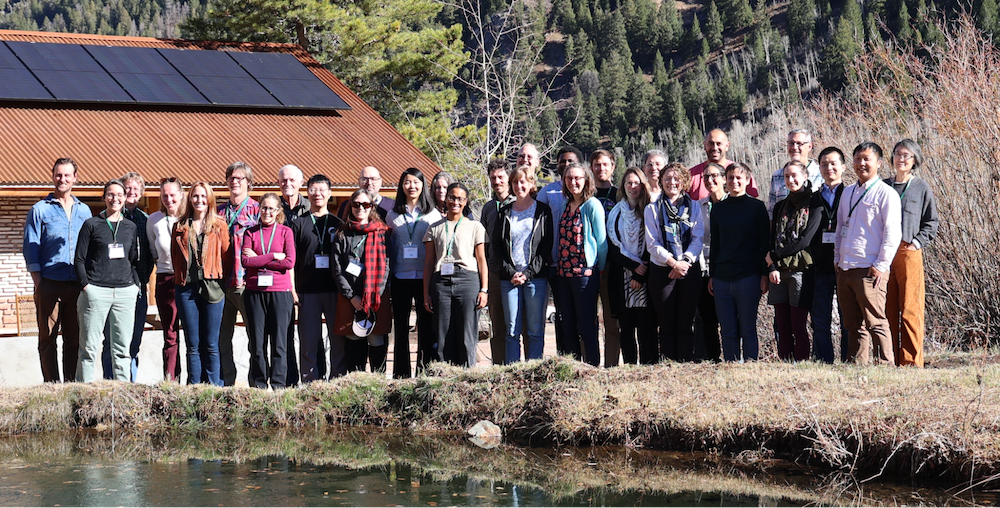
To accelerate the exchange of knowledge across all scales to reduce key areas of uncertainty associated with the role of plants in future water availability, AGCI hosted an interdisciplinary workshop, “Future Terrestrial Water Availability: Towards an Integrated Perspective on Water, Plants, and Climate.” Held in October 2024, this five-day workshop brought together 28 participants from a broad range of disciplines, including plant dynamics, hydrology, atmospheric modeling, hydrological applications, land disturbance, wildfire, land surface and climate modeling, ecohydrology, remote sensing, and agriculture. Co-chaired by Flavio Lehner (Cornell), Justin Mankin (Dartmouth), and Xiangtao Xu (Cornell), the workshop was convened with support from NASA’s Earth Science Division, Department of Defense’s ESTCP program, Cornell University, NOAA’s MAPP program, and Dartmouth College.
Categorizing uncertainty
Carefully structured with speakers in each session representing integrated perspectives across modeling, observation, and different components of the water cycle, the workshop program kicked off with an overview of the state of the science of plants as a lens for water availability, then quickly homed in on the need to better quantify and characterize uncertainties in interactions between plants, water, and climate systems.
One of the workshop’s opening presentations posited that variables used to determine future water availability could be categorized according to their level of uncertainty, from relatively well understood (energy, water, and carbon fluxes) and moderately understood (land cover and land use), to highly uncertain (plant responses to water stress and CO2 fertilization). This preliminary framework provided a launching point for deep conversation on specific attributes of each source of uncertainty. Another presentation further suggested that specific components of the plant response to water stress and CO2 fertilization could be further broken down into above- and below-ground mechanisms.
Where does the uncertainty come from?
As the week progressed, workshop participants divided into breakout groups to further investigate key areas of uncertainty.
Atmosphere boundary dynamics:
Some uncertainties stem from interactions at the boundary between the atmosphere and terrestrial ecosystems. The canopy air space spans from the leaf boundary layer and soil surface to the top of the canopy. Water fluxes from leaves and soil establish a vertical humidity profile that affects vapor pressure deficit (the difference between the amount of moisture in the air and how much moisture the air can hold when it is saturated), while evapotranspiration fluxes from various canopy levels influence the temperature profile, further impacting vapor pressure deficit. Temperature and moisture distributions within this space control airflow mixing, which in turn can feed back into canopy dynamics. Key uncertainties lie in understanding canopy vapor pressure and sensible heat gradients and their interactions with vegetation structure.
Understanding uncertainties at the canopy and boundary layers is further complicated by shifting precipitation trends amid changing atmospheric circulation dynamics. An overview of the differences between precipitation trends in observations versus climate model simulations highlighted the role that local geography plays. Local drivers vary significantly, and models capture some geographies better than others, underestimating hydroclimate changes in some areas where more extreme change has been observed.
Vegetation response to CO2 allocation and growth:
Key uncertainties in the vegetation response to CO2 allocation and growth include leaf-scale, tree-scale, and larger-scale processes. These uncertainties can be exacerbated when they interact with one another — for instance, uncertainty around the amount of water that leaves intercept increases when it is crossed with the uncertainty related to changes in leaf area due to shifts in atmospheric CO2. Scaling up leaf-level processes to global models is complicated by individual species-level differences in plant responses to changes in temperature, drought, vapor pressure deficit, and higher CO2 concentrations. Models also struggle with competing influences on evapotranspiration, like vapor pressure deficit and CO2, which may counterbalance each other at global scales but remain highly uncertain, particularly in dry regions. Key considerations include the diversity of plant hydraulics across landscapes, integrating plant biodiversity into global models, and the heterogeneity of agricultural lands, which are often modeled separately from natural systems.
Surface and subsurface changes:
Uncertainties in aboveground processes are not to be outdone by those in soil and subsurface processes. Variability in hillslope hydrology, soil structure, soil evaporation, and plant-rooting responses creates significant challenges to accurately modeling evapotranspiration, especially under drought conditions.
Disturbance and vegetation change:
Key land disturbances such as deforestation (especially in tropical regions), drought, wildfire, flooding, bark beetle infestations, and wind damage significantly affect land surface processes, with each posing unique modeling challenges. These disturbances are critically important because they influence over half of terrestrial evapotranspiration and significantly impact runoff, soil moisture, and leaf area index. Notably, replicating global gross primary productivity accurately requires accounting for a long list of disturbances, underscoring the need to better understand and model these processes within Earth system models.
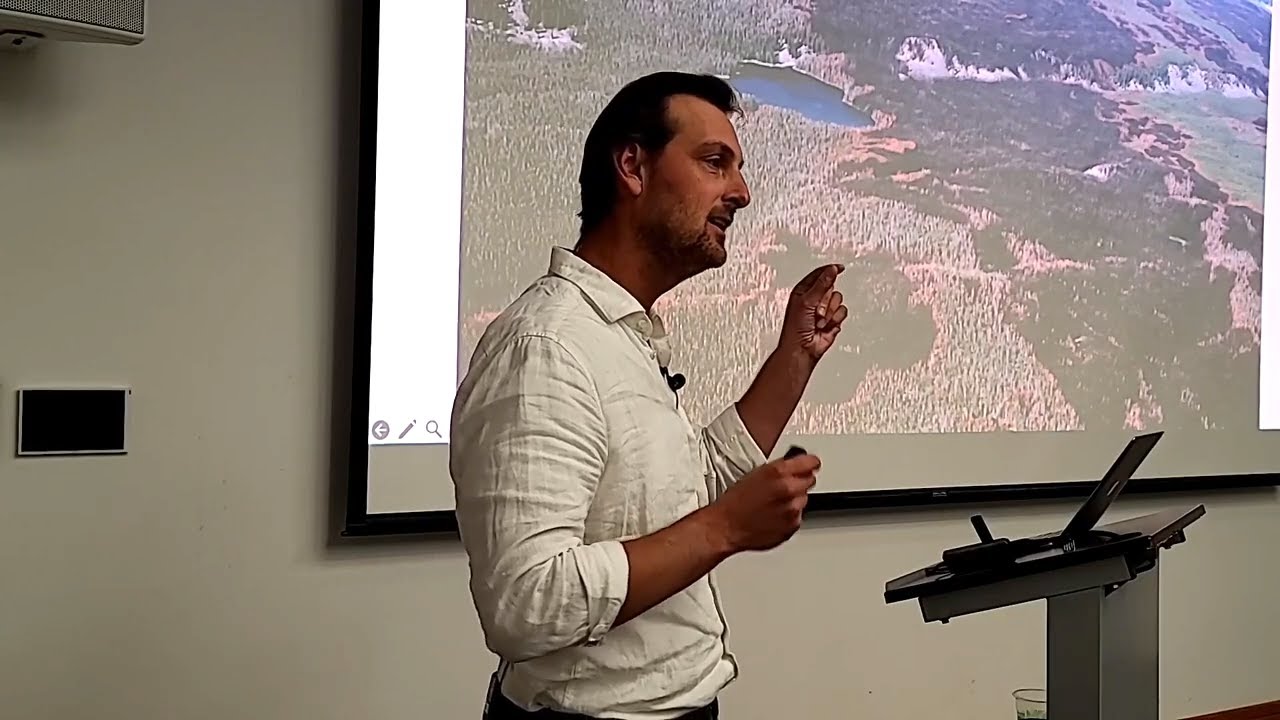
Dr. Park Williams, professor in the department of geography at UCLA, gave a powerful public lecture on the role of wildfire-driven large scale disturbance, entitled, “Why have we lost control of wildfire in the western United States?” Delivered to a local audience and live-streamed, this talk was followed by a Q&A session. Williams’ lecture, along with his workshop presentation later in the week, highlighted the increasing importance of wildfire as a mechanism for both forest disturbance and extreme streamflow events, such as post-wildfire flooding.
Next steps
Throughout the week, participants were challenged to evaluate the relative uncertainty and import of each of these dimensions. A perspective paper on the group’s findings and recommendations is underway, with the aim of rallying the wider community around research directions most critical to reducing the uncertainties associated with terrestrial water availability.