

Enhancing collaborative, decision-relevant research: A framework for the Colorado River Headwaters

Beginning primarily as snowmelt from the Rocky Mountains, the Colorado River is a vital water source for over 40 million people across seven U.S. states and Mexico. With growing pressures on water supply and the looming threat of ongoing drought, there is an urgent need for decision-relevant hydrologic research in this region, which serves as an example for similarly positioned mountain headwaters around the world. But research alone is not a silver bullet; this research needs to be both effective and deeply integrated with the water management community to make a meaningful impact.
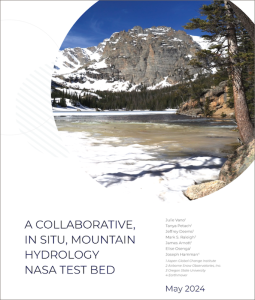
The importance of connecting research and practice to create more relevant and applicable outcomes lies at the heart of AGCI’s ethos. Recently, AGCI and our colleagues developed a framework for testing innovative, collaborative approaches to doing research, which leverages existing research efforts and aims to yield more interconnected and decision-relevant research outcomes in the Colorado River Headwaters. This framework, described as a “test bed” in our recently released report, “A Collaborative, In Situ, Mountain Hydrology NASA Test Bed,” identifies innovations in how we do research, which can promote and accelerate our collective understanding of this critical water supply.
The test bed was designed to support a suite of recommendations developed through three years of engagement, careful listening, and network analyses. We consulted researchers and those who forecast, operate, and manage resources and employed collaborative science expertise and network analysis to better understand the state of connectivity among researchers and between researchers and practitioners. We undertook a listening tour in which we attended over 15 events in the research and practice sectors and distilled the frustrations, successes, and needs of those working to better connect research to practice and practice to research.
Across these activities, a handful of common themes emerged. For example, the need to support the time and effort required to build local partnerships was stated and reiterated across both the research and practice communities. These themes are captured in a suite of recommendations (below) that form the backbone of our test bed design and are also broadly applicable to the research community.

By testing ways to implement these recommendations, we will gain a better understanding of how to leverage existing research and how to facilitate collaborations among and across the region’s research and practice networks, ultimately resulting in research that is more usable, relevant, and timely to those who manage and rely on the Colorado River.